US authorities have used Tether’s control over its dollar-linked stablecoin to freeze about $475 million connected to Iran in less than three months, extending Washington’s sanctions reach beyond the traditional banking system.
On July 14, the US government sanctioned four wallets on the Tron blockchain holding roughly $131 million in USDT. These addresses are linked to the Central Bank of Iran, also known as Bank Markazi.
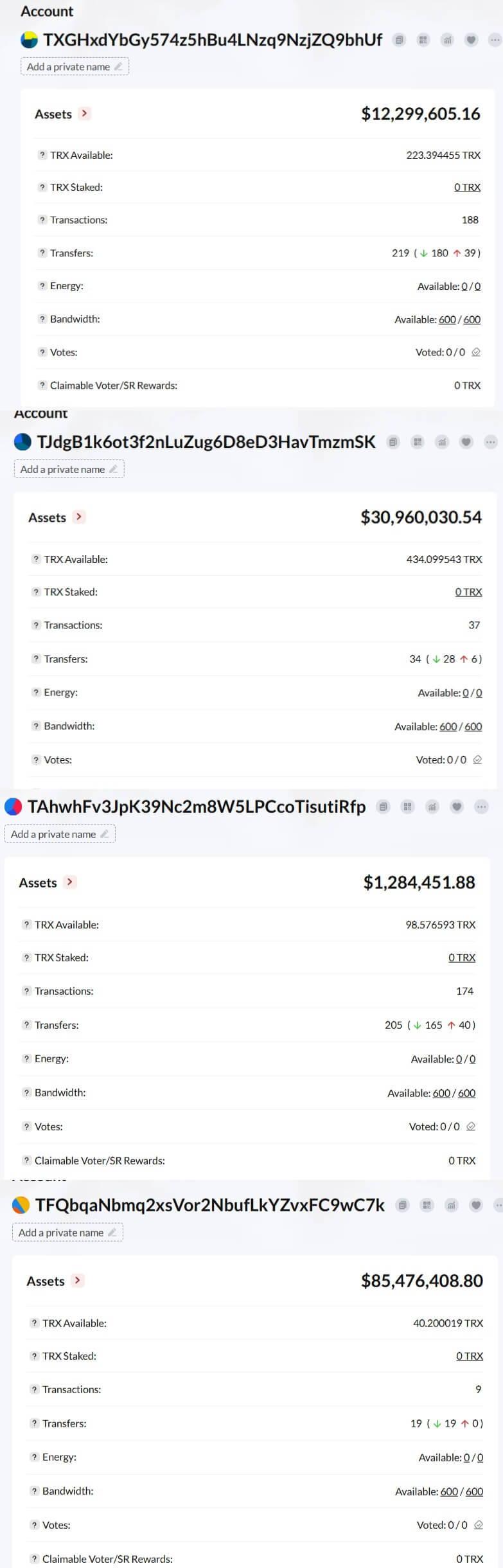
Treasury Secretary Scott Bessent said the Office of Foreign Assets Control (OFAC) targeted the wallets as part of a broader effort to disrupt revenue networks that Washington accuses Iran of using to evade sanctions. He said US authorities would continue to trace and restrict the movement of those funds.
The measures came as hostilities between Washington and Tehran intensified around the Strait of Hormuz. US Central Command said it would resume restrictions on maritime traffic entering and leaving Iranian ports beginning July 14, after announcing fresh strikes against Iranian military targets in the preceding days.
Meanwhile, the latest sanction follows Tether’s April freeze of more than $344 million across two other Tron wallets. At the time, the company said it acted in coordination with OFAC and US law enforcement after authorities identified the addresses.
Together, the two actions have immobilized about $475 million that US officials have tied to Iran, making Tether an increasingly important instrument in Washington’s campaign to limit Tehran’s access to dollar-denominated assets outside the banking system.
Tether can enforce those restrictions because it controls the contracts governing USDT. The company can block an address and prevent tokens held there from being moved, even though the wallet and its balance remain visible on the public blockchain.
Washington targets Iran’s crypto infrastructure.
The latest freeze extends a widening US campaign against the cryptocurrency infrastructure Iran uses to obtain and move dollar-denominated assets outside the traditional banking system.
Under an enforcement initiative known as Operation Economic Fury, the Treasury Department has targeted crypto exchanges, intermediaries, and blockchain addresses that US officials say have helped the Iranian government evade sanctions and finance military operations.
In June, the Office of Foreign Assets Control sanctioned Nobitex, Bitpin, Ramzinex and Wallex, four exchanges that handled a substantial share of Iran’s digital-asset activity. Treasury said Nobitex processed more than half of the country’s crypto inflows in 2025 and helped the Central Bank of Iran acquire hundreds of millions of dollars in stablecoins.
The exchange sanctions and wallet freezes show how Washington’s approach has moved beyond monitoring crypto transactions after they occur.
By identifying platforms that convert local currency into digital assets and working with issuers such as Tether to disable the resulting tokens, US authorities can target both the entry points and the funds held in custody.
The scale of Iran’s crypto market has made those channels an increasingly important part of US sanctions enforcement.
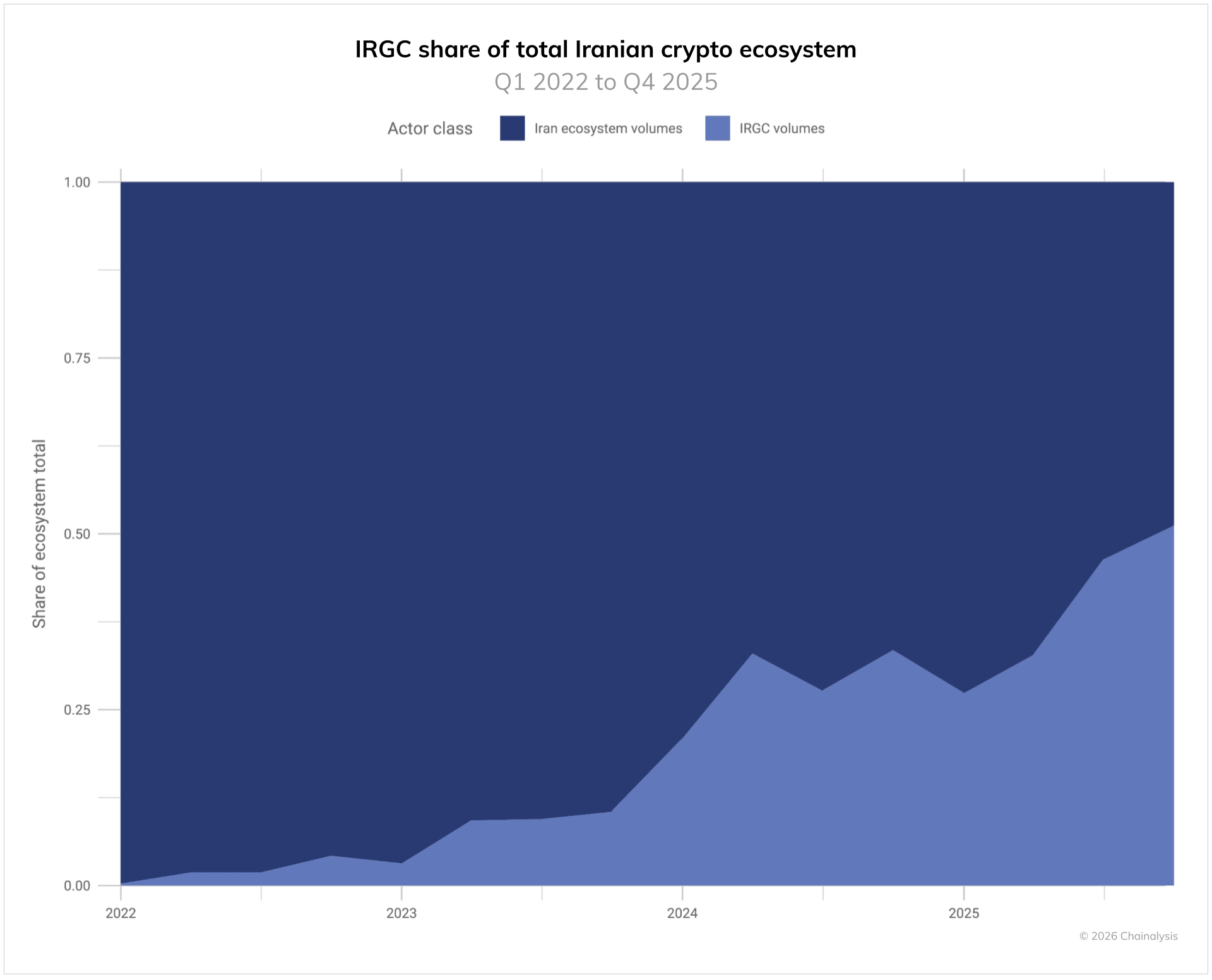
Chainalysis estimated that Iran’s cryptocurrency ecosystem received more than $7.78 billion in 2025. Addresses linked to the Islamic Revolutionary Guard Corps (IRGC) accounted for about half of the country’s crypto activity during the fourth quarter and received more than $3 billion over the year, the blockchain-analysis firm said.
By late May, Bessent said US authorities had seized or frozen nearly $1 billion in cryptocurrency connected to Iran through the wider campaign.
The latest action builds on that effort and shows how Tether’s control over USDT enables Washington to freeze funds held directly on public blockchain networks.
Tether’s controls give sanctions immediate force
These asset freezes highlight a defining difference between stablecoins like USDT and cryptocurrencies like Bitcoin.
No central company can normally stop a Bitcoin address from transferring coins when it controls the required private keys. USDT, by contrast, is issued and administered by Tether. The company can add addresses to a blocklist, making the tokens held there unusable.
That power does not remove transactions from Tron or rewrite the blockchain. It changes what Tether’s token contract will permit. An affected wallet may continue to display millions of dollars in USDT, but the holder cannot move or redeem the tokens while the address remains blocked.
Tether can also, in certain circumstances, cancel tokens at one address and issue an equivalent amount at another address. That capability allows law enforcement to move beyond merely identifying crypto assets and, when legal authority permits, place their value under government control.
Stablecoin issuers have long presented such controls as necessary measures to comply with sanctions, seizure warrants, and anti-money-laundering requirements. Their growing use also means that access to dollar-denominated tokens on public blockchains remains conditional on the issuer’s approval.
As a result, US agencies have steadily integrated that control into financial enforcement.
In December 2023, Tether said it had adopted a policy to disable tokens held in wallets on OFAC’s sanctions list. It also said it had brought the US Secret Service onto its compliance platform and was working to provide similar access to the FBI.
Earlier this year, the company said that it works with more than 340 law enforcement agencies in 65 countries. Those relationships had contributed to more than 2,300 cases and the freezing of over $4.4 billion, including more than $2.1 billion connected to US authorities, Tether said.
The role represents a notable turn for a company that spent years facing US scrutiny over the assets backing USDT.
In 2021, Tether agreed to pay $41 million to settle Commodity Futures Trading Commission allegations that it had made misleading statements about its reserves. It also joined the affiliated exchange, Bitfinex, in an $18.5 million settlement with the New York attorney general that year. Neither settlement required an admission of wrongdoing.
Tether has since positioned cooperation with US investigators as one of its central compliance policies. With about $184 billion of USDT in circulation, the company now operates a dollar substitute used across exchanges, payment services and informal financial networks around the world.
The post US turns stablecoin issuer Tether into a financial weapon against Iran, freezing nearly $500 million appeared first on CryptoSlate.